
Screven Weekly Arrest Sources
The sheriff's office runs no official seven-day blotter or multi-day roster. The public trail in Screven County comes from two publishers instead. Their formats differ. The Georgia Virtue booking category publishes dated jail booking and incident reports as images. The Statesboro Herald police-report category takes a text approach. It sorts arrests and incidents from Sylvania Police and the Screven Sheriff. Neither one mirrors the jail's live roster. Dates mark report periods, not publication days. Use them as a starting point, then confirm custody with SCSO.
Read Screven Arrest Blotters
Sort entries by date and agency instead of trusting any single weekly page to be complete. A Sylvania arrest can end up booked into Screven County Jail. A sheriff incident, though, is not always a booking. That distinction matters.
- Start with the report date or the likely arrest date.
- Check the Herald’s Sylvania Police and Screven Sheriff sections separately.
- Check Georgia Virtue’s dated Screven booking and incident report.
- Match the full name, agency, charge wording, and date across sources.
- Use the Daily Arrest Report path or call SCSO for current custody.
- Request the official booking or incident record when accuracy matters.
Screven County's recent-arrests hub pulls together the jail, court, photo, and request channels in one place. For multi-day arrest chronology, the blotter works well; it is not the tool for checking current custody.
Screven Arrest Log Fields
The county-wide recent-arrests hub lays out the jail, court, photo, and request channels. The weekly blotter serves chronology best. It does not confirm current custody.
| Item | How to read it |
|---|---|
| Person and age | Use to distinguish similar names; verify against the source record. |
| Report or arrest date | Do not confuse with the publisher’s posting date. |
| Agency heading | Shows whether Sylvania Police or SCSO supplied the entry. |
| Charge | An charge as reported, not a conviction. |
| Incident location | May describe an event without identifying a booked person. |
| Report image | A publisher attachment, not an official live gallery. |
Each publisher exposes different fields. A Georgia Virtue attachment may embed booking details or photos inside a single report image. A Herald arrest entry can list name, age, address, and charge, while incident sections lean on locations and narrative.
Two Screven Publisher Formats
The Herald leans on plain text. Its sections split arrests from incidents, and Sylvania Police items sit apart from sheriff items. One Sylvania and Screven report shows that layout clearly.
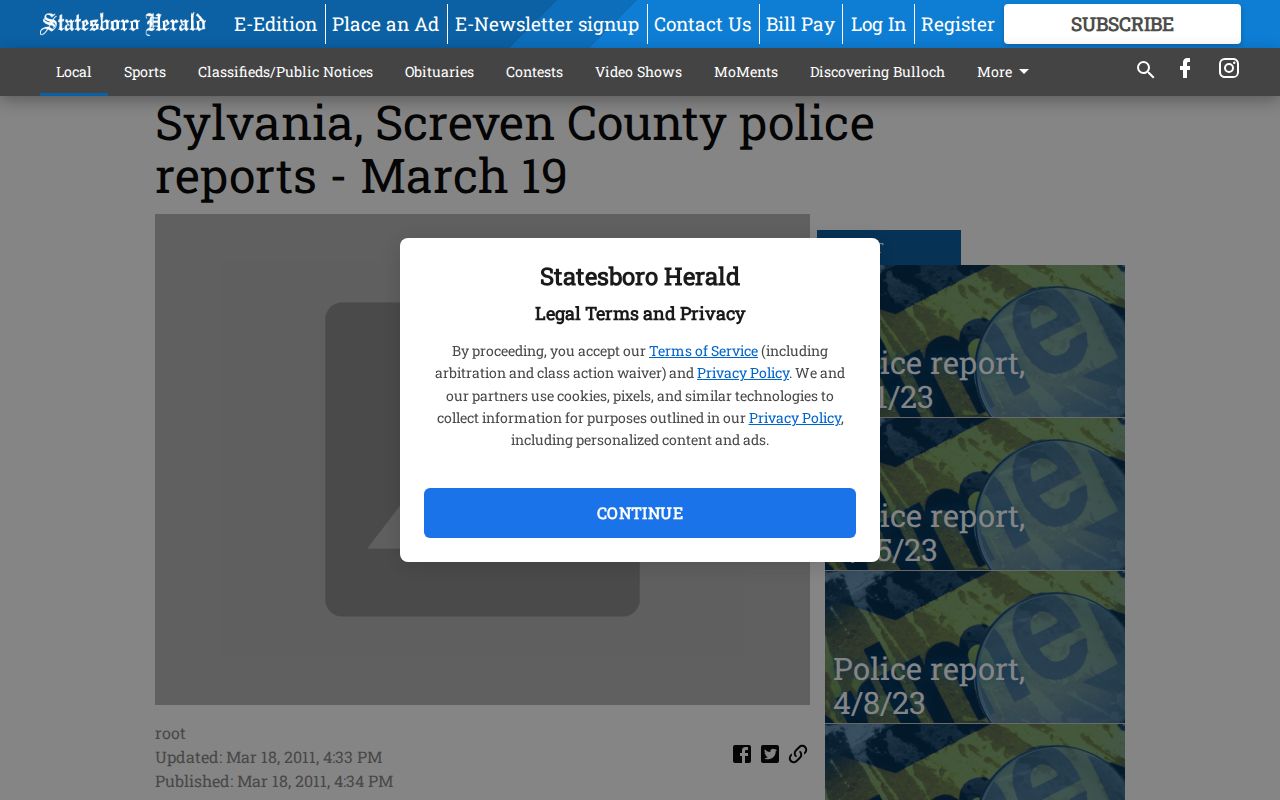
Each report carries a date stamp. That helps with text review of Screven arrests, though completeness across the county is not promised. The paper's wider police-report category lets you move between report dates.
Category depth helps with arrest chronology, but it remains the newspaper's archive rather than SCSO retention.
Screven Booking Reports by Image
The Georgia Virtue leans on images for its recurring Screven booking and incident reports. Its March 2, 2026 report is one example. It notes that SCSO hands these reports to media on request, and the publisher is not the source agency.
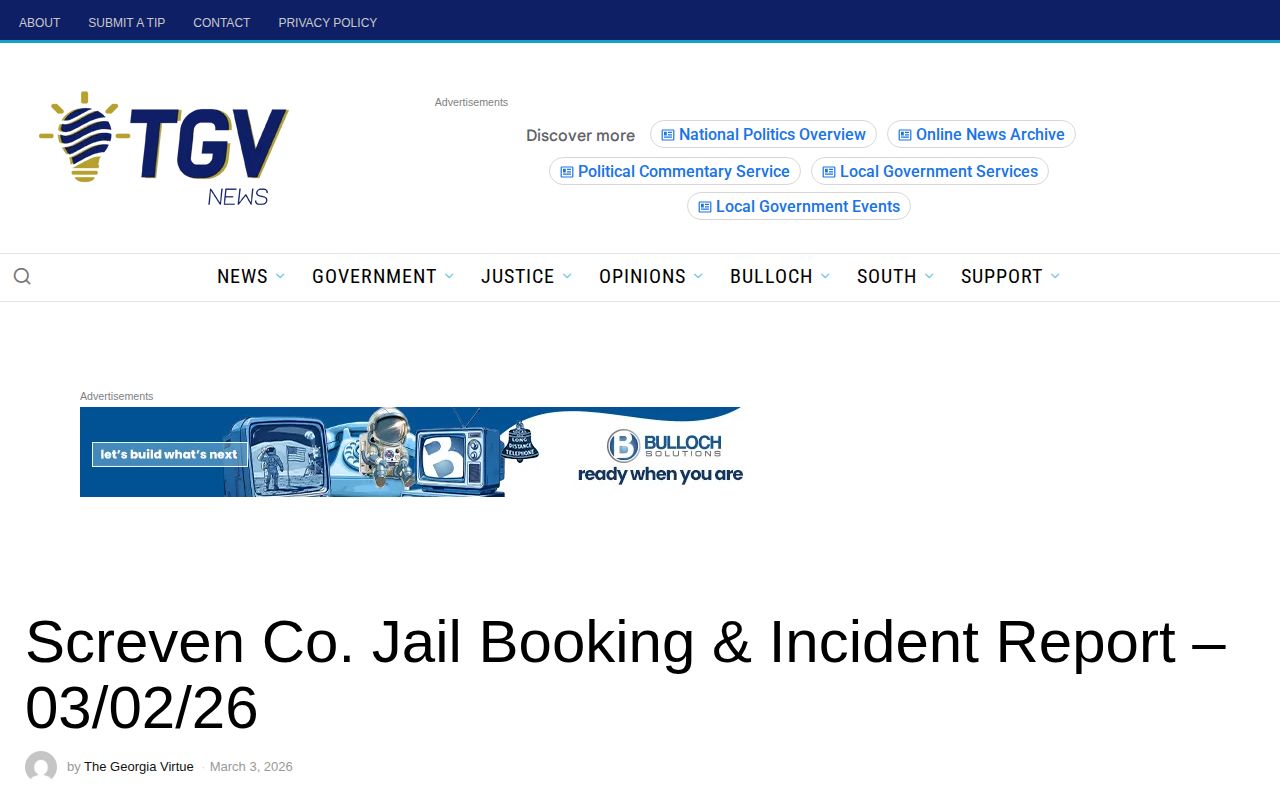
The dated report helps when you need a wider window. It does not prove same-day cadence, though. Nor does it show who is in custody right now. A public blotter can still exist even with no roster on the sheriff's site. The publisher may post images one day or several days after the report date. Treat each image as a copy of supplied material, and go to the agency record when something needs clarifying.
Official Sources Before Arrest News
Start with SCSO. The sheriff's official news page can carry selected case announcements, but it is not a routine blotter. For current custody, Screven County Jail holds the answer. The contact line is (912) 564-2013. Third-party arrest indexes rank below those sources. Mugshots.com has a Screven section, yet its visible material is historical, mostly from about 2011 through 2015. RecentlyBooked's Georgia index skips Screven. Busted Newspaper, Arrests.org, and Mugshots.zone list no local Screven section either. A generic state page or a guessed county address proves nothing about current coverage. Unofficial pages run stale, copied, corrected, or removed without notice. The court record carries the later outcome. The original law-enforcement record stays with the sheriff or the arresting department.
Older Screven Arrest Records
A web archive's depth is not a retention period. The Georgia Archives local-government schedules set minimum periods for records in analog and digital form. Public-safety entries list one year for incarceration lists. Jail booking records carry ten years after release. Jail registers run ten years after the last entry. Those schedules prove nothing about SCSO itself. The office may have adopted a given schedule or not, retained an item, digitized it, or transferred it to Georgia Archives. Retention never guarantees public display either. Exemptions, redaction, juvenile protections, and restricted records can all block access. For an older arrest entry, ask SCSO directly. Request a booking sheet, jail register entry, release record, incident report, or photograph by name and a narrow date range. Ask whether the material sits with SCSO, in county storage, was transferred, or was lawfully destroyed. If transfer is confirmed, check the Georgia Archives catalogue.
Screven Arrest Claims Need Court
An arrest marks the start, not the end, of a case. The booking log shows jail intake. A police report notes the charge as first written. What follows happens in court. Bond, dismissal, nolle prosequi, dead docket, a plea, an acquittal, a conviction, or a sentence can all change the picture. The charge itself may be reworded along the way.
Court records for Screven State and Superior Court sit behind Georgia Courts e-access. The clerk will want a full name and a rough date. A case number helps, if you have one. Expect a provider account, a fee, or a trip in person. Keep four facts separate. Note the booking date, publication date, current custody, and how the case ends.
Screven Reports Cross Agencies
Screven County arrest reports come from more than one desk. Sylvania Police, Hiltonia Police, Newington Police, the Screven County Sheriff's Office, and Georgia State Patrol can all be tied to one local arrest. Outside agencies can too. A newspaper heading tells you who reported the event. It does not tell you where the person was booked. Confirm that before you go further.
When you request a record, name both the arresting agency and Screven County Jail. The police department often keeps the incident narrative. The sheriff's office keeps intake, bond, release, and booking photo records. Ask the wrong office and the search stalls.
This split matters for counting. Incident numbers are not booking numbers. One arrest may never reach the jail. A jail roster entry might be nothing more than a hold for another jurisdiction. Keep each source label with its entry so nothing gets mixed.
Dates deserve the same care. A report date, arrest date, booking date, and publication date can all be different days. One publisher may print them all. Search each one, since a neighboring entry may surface. Never swap one date for another in silence. If the sequence stays murky, request the original record. Ask the proper court for the case file that followed.
Search Public Records
Sponsored Results